Mobile Development
Mobile App Development Cost in Mauritius: The Complete 2026 Pricing Guide
What a mobile app really costs in Mauritius — feature-by-feature pricing, MUR budget bands, hidden costs and how to get an accurate quote.
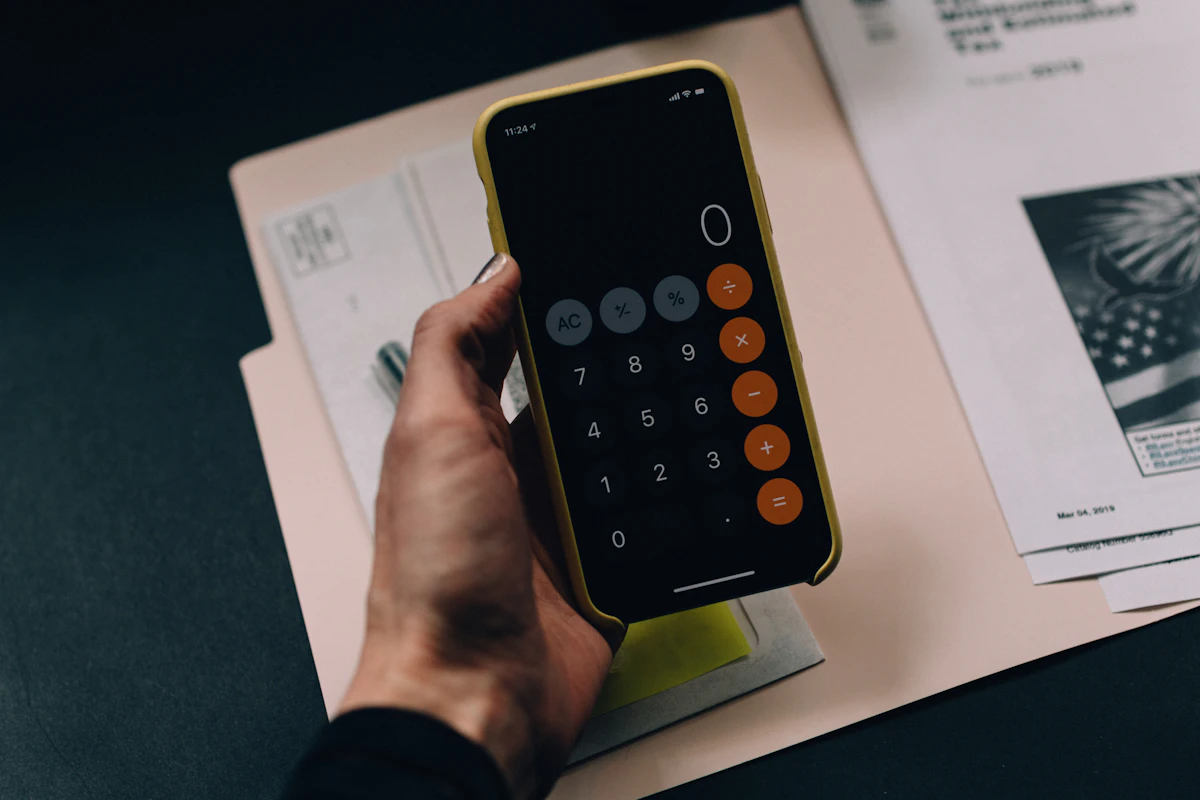
"How much does an app cost?" is the first question every Mauritius business owner asks, and it is also the hardest one for a developer to answer honestly in a single number. A loyalty app for a small café and a booking platform with live payments and Odoo integration for a hotel group can both fairly be called "a mobile app" — and the price gap between them is a factor of ten or more.
This guide breaks the cost of mobile app development in Mauritius down to its actual cost drivers, gives realistic 2026 budget bands in MUR, and shows you what to look for — and look out for — in a development quote before you commit any money.
Why App Development Costs Vary So Much
An app's price is not set by "app" as a category, it is set by the sum of the specific pieces you ask a developer to build: how many screens, how much custom backend logic, which third-party systems it talks to, and how much design and testing time the finished product genuinely needs. Two developers quoting the same idea can land 200 percent apart because one is pricing a template-driven build and the other is pricing a fully custom one — neither figure is wrong until you know exactly what is included.
The most reliable way to budget is not to ask "what does an app cost" but to price out the specific features your app needs, one at a time, and sum them. That is the approach this guide takes.
What Actually Drives the Price
User Accounts and Authentication
A simple email/password login is inexpensive. Social login (Google, Facebook, Apple), phone-number OTP verification, and role-based access for staff versus customers each add development and testing time. Budget roughly MUR 20,000–60,000 for a properly built authentication layer with password reset and session management done securely.
Payment Gateway Integration
Wiring in Juice (MCB), MauBank WithMe or Blink, and international rails like PayPal or Visa/Mastercard processing typically adds MUR 40,000–120,000 per gateway, depending on whether you need saved cards, subscriptions, or split payments. Each gateway has its own sandbox, certification process, and edge cases around failed or partial payments that need proper handling — this is not a copy-paste integration.
Push Notifications and Real-Time Data
Order-status updates, loyalty-point alerts, and live stock or booking availability require a real-time backend (typically WebSockets or a managed real-time database) rather than a simple request-response API. Expect MUR 30,000–90,000 depending on how many event types the app needs to react to.
Odoo ERP or Other Backend Integration
For businesses running Odoo ERP, connecting the app to Odoo's REST API for inventory, CRM tiers, and order flow is one of the highest-value integrations available — see our Odoo and mobile app integration guide for what this unlocks. Budget MUR 60,000–200,000 depending on how many Odoo modules the app reads from and writes to, and whether custom API endpoints need to be built on the Odoo side.
Offline Mode and Geolocation
Apps that must keep working with patchy connectivity — field service, delivery tracking — need local data caching and sync logic, which is meaningfully more complex than an always-online app. Geolocation and mapping (delivery routes, nearest-branch finders) typically add MUR 25,000–70,000 depending on map provider and routing complexity.
Admin Dashboard
Almost every business app needs a companion web dashboard for staff to manage content, view orders, or moderate users. This is frequently underestimated: a proper admin panel can represent 20–30 percent of total project cost on its own, typically MUR 80,000–250,000.
Platform Choice and Its Cost Impact
Building with a cross-platform framework such as React Native or Flutter — one codebase for both iOS and Android — is typically 30–50 percent cheaper than building two separate native apps, and is the right default for the vast majority of Mauritius business apps. Native development (Swift for iOS, Kotlin for Android) only earns its higher cost for graphics-intensive, AR/VR, or deep hardware-integration use cases. Our companion guide, React Native vs Flutter vs Native, walks through how to make that call for your specific project.
Typical Price Bands for Mauritius Businesses in 2026
- MVP / startup app (core flow only, 1–2 features, no complex integrations): MUR 150,000 – 350,000
- Standard SME business app (cross-platform, one payment gateway, push notifications, admin dashboard): MUR 350,000 – 800,000
- Complex / enterprise app (multiple integrations, Odoo ERP sync, real-time data, offline mode): MUR 800,000 – 1,800,000+
- Native iOS + Android as separate builds: add 40–60 percent to the cross-platform figure above
- Ongoing maintenance and small feature work: MUR 15,000 – 60,000 per month
These bands assume a competent local or regional development partner working to a clear specification. Rock-bottom quotes well below the MVP band usually mean a heavily templated build, offshore freelancers with limited accountability, or scope that will expand sharply once development starts.
Freelancer vs Local Agency vs Offshore Outsourcing
A single freelancer is the cheapest option and can work well for a very simple, well-specified app — but you carry the risk if they become unavailable mid-project, and few freelancers can competently cover design, backend, and both mobile platforms alone. A local Mauritius agency costs more but gives you a team that can be met in person, direct accountability if something goes wrong post-launch, and a partner who already understands local payment gateways and the Data Protection Act rather than learning them on your project. Offshore outsourcing (typically South Asia or Eastern Europe) can undercut local pricing by 30–50 percent, but adds time-zone friction, weaker accountability if things go wrong, and communication overhead that often erodes the headline savings. For apps with any Odoo, payment, or compliance complexity, the total cost of a poorly executed cheap build — rework, delays, lost trust — regularly exceeds what a proper local build would have cost.
A useful test before choosing: ask how the team would handle a critical bug found the week after launch. A freelancer's answer depends entirely on their personal availability; an offshore team's answer depends on time-zone overlap and contract terms; a local agency's answer should be a same-business-day fix as a matter of course. Weight that answer against the price difference, not just the headline quote.
Hidden Costs Businesses Forget to Budget
- Apple Developer Program: USD 99/year, required to publish on the App Store.
- Google Play Developer account: USD 25 one-time.
- Backend hosting: MUR 3,000–25,000/month depending on user volume and whether you self-host or use a managed cloud provider.
- Third-party API costs: mapping, SMS/OTP, and push notification services often bill per-use once you exceed a free tier.
- Ongoing maintenance: OS updates, new device sizes, and security patches are recurring, not optional — an unmaintained app degrades and eventually breaks.
- App Store Optimisation and launch marketing: a great app with zero organic visibility needs a promotion budget; see our App Store & Google Play launch guide.
How to Estimate ROI Before You Commit Budget
Before signing off on a build, model the payback in simple terms: what is the value of one retained customer or one converted transaction through the app, and how many of those does the app need to generate monthly to cover its build cost within, say, 12–18 months? For a loyalty app, this might be incremental repeat-visit revenue; for a booking app, it might be commission saved versus a third-party platform. If you cannot articulate a plausible path to that number before development starts, treat the project as a strategic bet rather than a funded initiative, and consider scoping down to a genuine MVP first.
Example: Budgeting a Real Project
Take a mid-sized Mauritius restaurant group considering an ordering app. The core flow — browse menu, place order, pay, track status — sits squarely in the Standard SME band. Adding one payment gateway (Juice), push notifications for order status, and a basic admin dashboard for staff pushes the estimate toward the top of that band: roughly MUR 550,000–750,000 for a cross-platform build. Skipping the payment gateway at launch and taking orders for pay-on-collection only, with card payment added in a second phase once usage is proven, could bring a genuine MVP in closer to MUR 350,000–450,000 — a realistic way to de-risk the investment without cutting the features that actually validate demand.
Red Flags in a Development Quote
- A single flat number with no breakdown by feature or phase — you cannot negotiate or trim what you cannot see itemised.
- No mention of who owns the source code and App Store/Google Play developer accounts after launch.
- No separate maintenance or support cost — someone always ends up paying for post-launch bug fixes, whether budgeted or not.
- Vague timelines with no milestone structure, making it hard to catch scope drift early.
- A quote that is 50 percent or more below every other quote you received, with no clear explanation of what is being cut.
How to Get an Accurate Quote: An RFP Checklist
Give every prospective developer the same information so quotes are genuinely comparable:
- A written list of core user flows (what a customer or staff member actually does in the app, step by step)
- Which systems it must integrate with — Odoo, a specific payment gateway, SMS provider — named explicitly
- Whether you need iOS, Android, or both at launch
- Any offline, real-time, or geolocation requirements
- Your target launch date and any hard external deadlines (a seasonal peak, an event)
- Whether you want a phased MVP-first build or the full feature set at once
A developer who asks clarifying questions about these points before quoting is a far better sign than one who returns a number within the hour.
Frequently Asked Questions
What is the cheapest way to test an app idea in Mauritius?
Build a genuine MVP — the smallest version that delivers the core value proposition — for MUR 150,000–350,000, validate real usage, then expand. Building the full feature set before validating demand is the most common way app budgets are wasted.
Does a website with app-like features cost less than a native app?
Usually yes, and for many Mauritius businesses a well-built mobile website or WhatsApp Business setup delivers most of the customer value without app-development or App Store overhead. Reserve native/cross-platform app spend for cases where push notifications, offline use, or home-screen presence are genuinely commercially important.
Is Odoo integration always worth the extra cost?
If your business already runs Odoo for inventory, CRM, or invoicing, integration is usually one of the highest-ROI features you can add, since it eliminates duplicate data entry and enables real-time stock and order visibility. If you are not on Odoo, it is not worth adopting the platform purely to enable this integration.
How much should I budget monthly after launch?
Plan for MUR 15,000–60,000 per month for maintenance, OS-compatibility updates, and minor feature work, scaling with app complexity and user base.
Getting an Accurate Number for Your Project
The only reliable way to price your specific app is to specify it properly and get itemised quotes from developers who ask the right questions before naming a number. Sandbox Digital builds cross-platform mobile applications for Mauritius businesses with transparent, itemised pricing and native Odoo ERP integration. See our app development services or request an itemised quote for your app project.
Tags
Related Articles